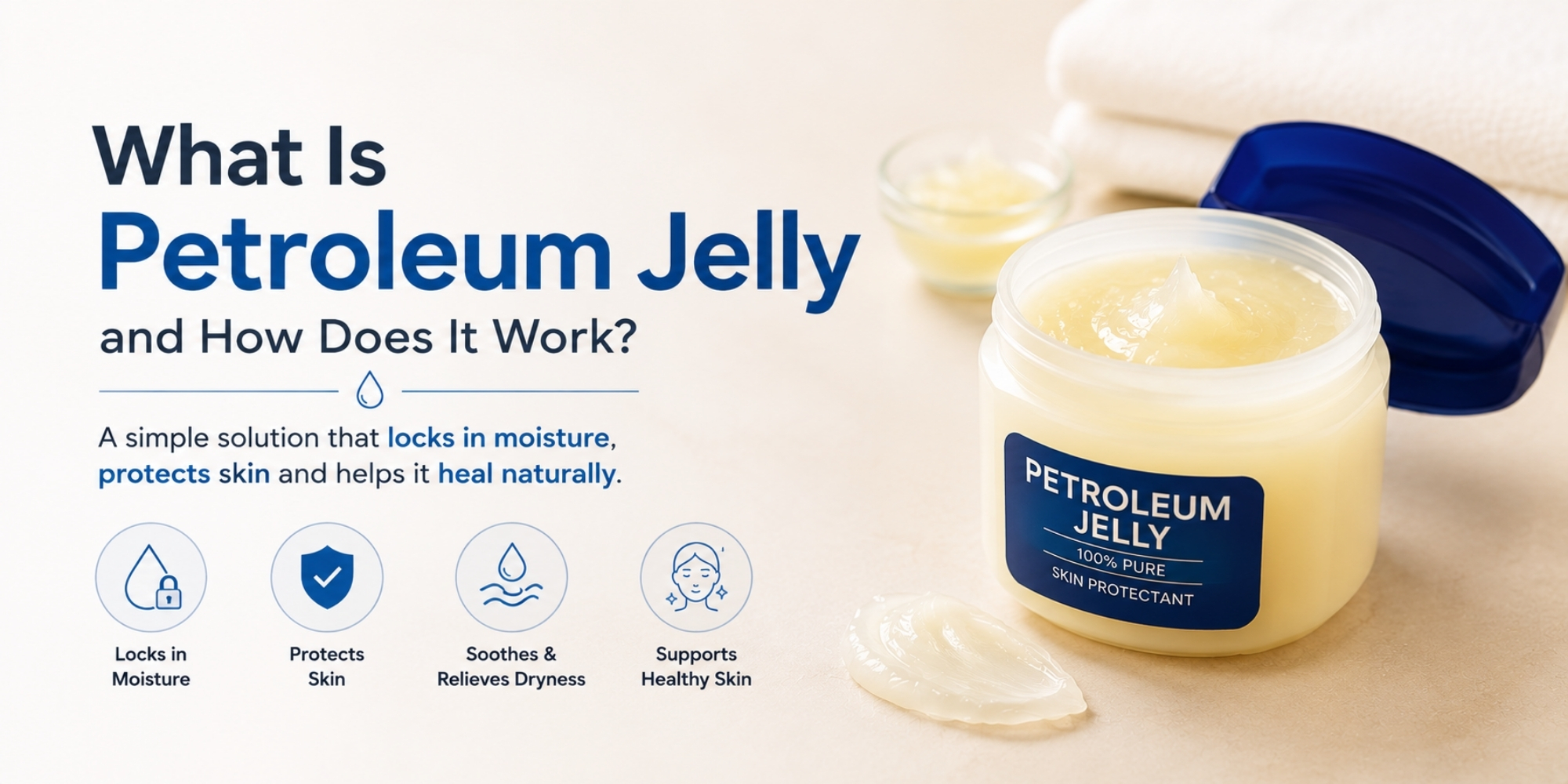
What Is Petroleum Jelly and How Does It Work?
There are very few skincare products that have survived over 150 years of use, earned the trust of dermatologists, and still remain one of the most affordable items in any pharmacy. Petroleum jelly is one of them. Found in nearly every household, this thick, semi-solid product has a reputation that stretches far beyond basic skin care. From healing minor wounds to protecting chapped lips in freezing weather, it has quietly remained a skincare essential while trends around it came and went.
But what exactly is it, how does it work at a scientific level, and is it really as effective as people claim? This guide answers all of those questions and walks you through everything you need to know about this remarkably versatile product.
What Is Petroleum Jelly?
What is petroleum jelly is a question more people should be asking before reaching for it on pharmacy shelves. The simple answer is that it is a semi-solid mixture of hydrocarbons derived from petroleum. Technically known as petrolatum, it is produced through a dewaxing process applied to crude oil, which separates and purifies a specific fraction of waxy, mineral-based compounds. The result is a translucent, colorless to pale yellow substance with an almost odorless nature, a smooth, greasy texture, and a melting point that sits very close to body temperature, typically between 40°C and 70°C.
The product has a fascinating origin story. In 1859, a chemist named Robert Augustus Chesebrough visited oil fields in Pennsylvania and noticed that workers were using a thick, dark residue called "rod wax" that built up on their drilling equipment to soothe burns and heal skin injuries. Chesebrough spent years refining and purifying this substance in his Brooklyn laboratory and eventually patented the process in 1872. He branded the purified product as Vaseline and began selling it as a healing jelly, reportedly demonstrating its effectiveness by deliberately burning and cutting his own skin on sales tours.
Today, petroleum jelly is classified into three grades: industrial, medical, and cosmetic. The cosmetic and medical grades go through rigorous triple-distillation and purification to remove any potentially harmful compounds, particularly polycyclic aromatic hydrocarbons (PAHs), which are removed during the refining process. When you buy a reputable brand like Vaseline or any certified cosmetic-grade petroleum jelly, you are getting a product that is FDA-recognized as safe for skin use.
How Does Petroleum Jelly Actually Work?
Understanding how petroleum jelly works makes it much easier to use it correctly and get the most out of it. The science behind it is straightforward but genuinely impressive.
Petroleum jelly is what skincare scientists call an occlusive agent. This means it does not absorb into the skin or add moisture to it directly. Instead, it works by sitting on top of the skin and forming a thin, water-resistant barrier that dramatically slows down a process called transepidermal water loss (TEWL).
TEWL is the natural process by which your body loses moisture through the outermost layer of the skin, the stratum corneum, into the surrounding air. When this loss is too high, skin becomes dry, tight, flaky, and more prone to irritation. Environmental factors like cold weather, low humidity, wind, hot showers, and harsh soaps all speed up this moisture loss.
When you apply petroleum jelly to your skin, it creates a physical seal over the stratum corneum. Research shows this barrier can reduce transepidermal water loss by close to 98%, making it one of the most effective occlusive moisturizers known to dermatology. Your skin then retains its natural moisture, heals more effectively, and feels noticeably softer and more comfortable.
This is also why petroleum jelly works best when applied to slightly damp skin. If you apply it after washing your hands or stepping out of the shower while the skin is still slightly moist, the barrier locks in that surface moisture along with the skin's own water content. Applying it to completely dry skin means there is less moisture for it to seal in.
Beyond occlusion, petroleum jelly also protects the skin from external irritants, bacteria, and environmental pollutants by keeping them out while allowing the skin's natural repair mechanisms to function undisturbed. This is why it has been used in wound care for over a century and why dermatologists recommend it for post-surgical skin healing, minor burns, and abrasion recovery.
Petroleum Jelly for Dry Skin: Why It Works So Well
Petroleum Jelly for Dry Skin is arguably its most well-known and well-supported use. Dry skin occurs when the skin's natural lipid barrier is compromised and cannot retain enough moisture. This can happen due to genetics, aging, seasonal changes, frequent handwashing, exposure to chemicals, or underlying conditions like eczema and psoriasis.
What makes Petroleum Jelly for Dry Skin so effective compared to many commercial lotions is its formulation. Most body lotions are water-based, meaning their main ingredient is water. While they can feel good immediately after application, water-based products evaporate from the skin relatively quickly. Petroleum jelly, being purely oil-based, does not evaporate. It stays on the skin and continues to function as a barrier for several hours.
Dermatologists frequently rank it above lotions and creams specifically for this reason. The American Academy of Dermatology recommends it for a wide range of dry skin conditions, from everyday dryness to more serious skin concerns like eczema.
Here is how to use it most effectively for dry skin:
After bathing or washing your hands, pat the skin until it is slightly damp rather than fully dry. Apply a small amount of petroleum jelly to the dry area and gently rub it in. Because it does not absorb into the skin, a little goes a long way. Focus on areas that tend to get driest such as elbows, knees, heels, and the backs of the hands.
For severely dry or cracked heels, apply a generous layer before bed and cover your feet with clean cotton socks overnight. By morning, the difference in softness and texture is typically very noticeable.
For dry elbows and knees, the same overnight approach works well. Apply petroleum jelly, cover with a thin layer of clothing, and allow it to work undisturbed while you sleep.
For eczema-prone skin, petroleum jelly is one of the most recommended barrier products because it is fragrance-free, hypoallergenic, and does not contain the harsh additives found in many medicated creams that can trigger flares.
Petroleum Jelly for Lips: The Right Way to Use It
Petroleum Jelly for Lips is one of the oldest and most trusted remedies for chapped, dry, or cracked lips. The lips are uniquely vulnerable to dryness because they have no sebaceous (oil) glands to naturally moisturize themselves the way the rest of your skin does. They also have a much thinner outer layer, making them more susceptible to moisture loss from wind, cold temperatures, sun exposure, habitual lip licking, and dehydration.
Petroleum Jelly for Lips works by forming a protective seal over the delicate lip surface that prevents moisture loss and shields the skin from environmental stressors. When applied before going outside in cold or windy weather, it acts as a physical barrier that reduces the damage caused by the elements. When applied at night before bed, it allows the lips to retain moisture undisturbed through hours of sleep, often producing noticeably softer lips by morning.
One important nuance to understand: petroleum jelly is an occlusive, not a humectant. Humectants like hyaluronic acid and aloe vera actively draw moisture from the air or deeper skin layers into the skin surface. Petroleum jelly does not do this on its own. It seals in whatever moisture is already present rather than adding new moisture.
This means it works best as a second step, not a standalone treatment for severely dry lips. For the best results, apply a thin layer of a moisturizing product such as aloe vera gel, a natural oil like jojoba or vitamin E, or a shea butter-based balm first. This combination approach makes it significantly more effective than using petroleum jelly alone on already very dry lips.
For everyday lip care and prevention, applying petroleum jelly directly to your lips at night before bed is a simple, effective habit that most dermatologists support. It protects the lips during sleep when they are not receiving any active moisture input, keeps them soft, and helps prevent the kind of chronic dryness and cracking that can be hard to reverse once it sets in.
Petroleum Jelly Uses: The Full Spectrum
The breadth of Petroleum Jelly Uses goes well beyond basic moisturizing. Here is a comprehensive look at how it can be used across different areas of your health, beauty, and everyday life.
Wound Care and Healing
For minor cuts, scrapes, abrasions, and surgical site recovery, petroleum jelly is one of the most dermatologist-recommended wound care products available. It keeps wounds moist, which clinical research consistently shows leads to faster healing, lower infection risk, and better scar outcomes compared to letting wounds dry out and scab over. Apply a thin layer to a cleaned wound, then cover with a bandage. Change the dressing and reapply daily until the wound closes.
Slugging: The Viral Overnight Skin Routine
One of the biggest skincare trends of recent years is called slugging, which involves applying a thin layer of petroleum jelly as the very last step in your nighttime skincare routine, sealing in all the serums and moisturizers applied beforehand. The term originated from Korean beauty culture and went massively viral in 2020. Dermatologists gave it a largely positive reception because the science behind it is sound. By forming an occlusive seal over the skin, it enhances the absorption and retention of the products underneath, resulting in noticeably plumper, more hydrated skin by morning. If you have dry or normal skin, it is worth trying once or twice a week.
Cracked Heels and Rough Feet
One of the most practical Petroleum Jelly Uses is treating cracked heels. Soak your feet in warm water for 10 minutes to soften the skin. Towel dry, and then apply a generous amount of petroleum jelly to the heels and soles. Put on a pair of clean cotton socks and leave them on overnight. This simple routine, done two to three times a week, is one of the most effective home remedies for cracked heels available without a prescription.
Protecting Skin in Cold Weather
Before going out in cold, windy weather, applying petroleum jelly to exposed skin on the face, hands, and lips creates a physical wind barrier that reduces moisture stripping from the surface. It is particularly useful for people who work outdoors or who live in very dry, cold climates.
Diaper Rash Prevention and Treatment
Petroleum jelly is widely used for infant skincare because it is hypoallergenic and contains no fragrances or harmful additives. Applied as a barrier cream during diaper changes, it protects the delicate skin of babies from the constant moisture exposure that causes diaper rash.
Preventing Chafing
Applied to areas where skin rubs against skin or against clothing during physical activity, such as inner thighs, underarms, or the feet inside shoes, petroleum jelly significantly reduces friction and the painful chafing and blistering that can result from it.
Eyelid and Under-Eye Skin Care
The skin around the eyes is among the thinnest and most delicate on the body. A tiny amount of petroleum jelly applied to dry eyelids or the under-eye area at night can help keep this skin hydrated and reduce the appearance of fine lines caused by dryness.
Rehydrating Dry Cuticles and Nails
Dry, ragged cuticles and brittle nails respond well to regular petroleum jelly application. Massaging a small amount into the cuticles and nail bed daily strengthens and softens them without the need for expensive nail treatments.
Nasal Dryness Relief
Doctors, particularly ear, nose, and throat specialists, frequently recommend applying a small amount of petroleum jelly inside the nostrils to combat dryness, especially in dry climates, heated indoor environments, or during illness. It soothes the mucous membranes and can reduce the frequency of nosebleeds caused by dry nasal passages.
Protecting Minor Burns
For first-degree burns and mild heat-related skin irritation, petroleum jelly applied to the area keeps it moist, reduces the burning sensation, and supports faster healing. It should not be used on severe burns or open wounds that require medical attention.
Is Petroleum Jelly Safe? What You Should Know
Petroleum jelly has a very strong safety profile when the product is cosmetic or medical grade and properly refined. The concerns around safety relate specifically to unrefined petroleum jelly, which can contain PAHs, compounds classified as potentially carcinogenic. Reputable commercial products like Vaseline are triple-distilled and certified to be free from these compounds.
The ingredient is recognized as safe by the FDA for topical use. It is non-comedogenic in its pure form, meaning it does not clog pores when used correctly. It is hypoallergenic, fragrance-free, and suitable for sensitive skin and infants.
A few situations where you should exercise caution: avoid applying it to actively broken, infected, or severely bleeding skin, as the occlusive barrier can trap bacteria. If you have very oily or acne-prone skin, use it sparingly and avoid applying it to the entire face, as heavy application could potentially trap debris and contribute to breakouts. Always choose fragrance-free, purified products and avoid any petroleum jelly that contains added fragrances, preservatives, or colors, as these additives are the more likely source of any skin reactions.
Conclusion:
Petroleum jelly has lasted over 150 years in medicine cabinets and skincare routines for a simple reason: it genuinely works. Its occlusive barrier mechanism is one of the most effective ways to protect and moisturize skin available without a prescription. Whether you are using Petroleum Jelly for Lips on a cold morning, treating a minor cut, soothing cracked heels overnight, or incorporating it into a slugging routine, the science supports every one of these applications
The key is to use a properly refined, cosmetic-grade product, apply it correctly on damp skin for best results, and choose it as a targeted treatment rather than a replacement for a complete skincare routine. For something so affordable and widely available, few products in the beauty world deliver as much consistent, dermatologist-backed value.
Frequently Asked Questions
Yes, petroleum jelly is generally safe for daily facial use, especially at night. Apply a thin layer as the final step in your skincare routine to lock in moisture. Those with oily or acne-prone skin should use it sparingly, focusing on dry areas.
Petroleum jelly does not add moisture to the skin on its own. It works as an occlusive agent, meaning it prevents the moisture already present in your skin from escaping. For best results, apply it to slightly damp skin or after applying a water-based moisturizer so it locks in that moisture effectively.
Yes, medical and cosmetic grade petroleum jelly is considered safe for baby skin. It is widely recommended by pediatricians for diaper rash prevention and treatment, dry skin patches, and general skin protection. Because it contains no fragrances or harsh chemicals, it is one of the gentlest barrier products available for infant care.
Vaseline is simply a brand name for 100% white, triple-refined petroleum jelly. It is not a different product chemically. The Vaseline brand was one of the first to commercially purify and market petroleum jelly, and the name has become so synonymous with the product that many people use both terms interchangeably. When you buy generic petroleum jelly from a pharmacy, you are buying the same core ingredient, though you should check that it is cosmetic or medical grade.
Yes, research and decades of clinical practice support the use of petroleum jelly in minor wound care. Keeping a wound moist with petroleum jelly rather than letting it dry out leads to faster healing, a lower risk of infection, and better cosmetic outcomes with less scarring. The American Academy of Dermatology recommends its use for minor cuts, scrapes, and abrasions. Clean the wound first, apply a small amount, and cover with a bandage, repeating daily until the wound heals.
Get in touch with us!
×